Rust: how a solo player with 14,782 hours survives official servers
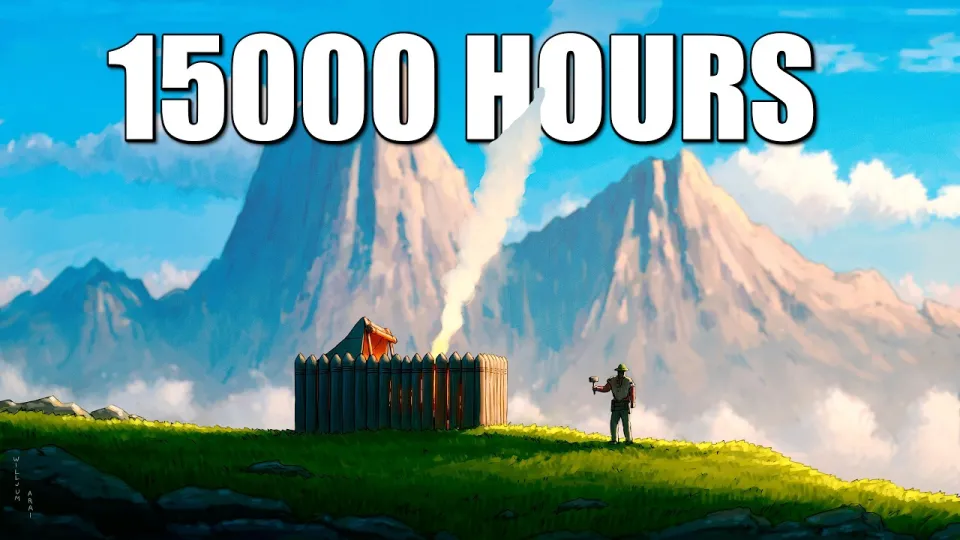
Video: How a solo with 14,782 Hours plays official rust...
Want articles like this for your own video to promote it on YouTube and Google? Order them through the Telegram bot @sat_sit_bot. Articles with your video embedded are written and posted by the bot itself — on popular topical sites (no ads). Try it free: 50 articles on us.
· based on the channel Willjum
Playing Rust solo on official servers with 14,782 hours logged comes down to a small set of repeatable habits: build small and hidden, spend scrap on information before firepower, avoid fights you did not choose, and treat every wipe as a fresh economy rather than a deathmatch. That hour count is the headline, but the actual method is what keeps a solo alive past day one on a server where groups of five or more are farming the same monuments.
If you want to see the gear and grooming sponsors that support this kind of long-form content, the Manscaped page for Willjum's videos carries the current discount offers.
What 14,782 hours actually means in Rust
Fourteen thousand seven hundred and eighty-two hours is roughly 616 full days of playtime, or about 1,180 hours per year if spread across the 12.5 years since Rust first appeared in early access. Put another way, it is close to the annual hours of a part-time job, sustained for over a decade. For a solo player this translates into pattern recognition rather than raw aim: knowing which monuments get contested at which point in a wipe, which sounds mean a group is rotating, and when a fight is worth taking.
That experience shows up in small decisions. A veteran solo does not sprint across open terrain at prime time, does not build next to a road, and does not carry a full inventory of scrap to an outpost when a stash would do. The hours are not a flex stat so much as a database of mistakes already made.
How a solo survives on official servers
The core rule of official Rust is that nobody is coming to help you, and groups have no size cap. A solo run on a vanilla official server therefore depends on staying off the map as a target rather than winning engagements.
- Build away from monuments and roads, ideally in terrain that forces attackers into a narrow approach.
- Keep the footprint small early: a 2x1 or 2x2 with an airlock is enough for the first day and far cheaper to lose.
- Farm scrap in low-traffic areas and spend it on a workbench and blueprints before weapons.
- Use stashes for valuables when moving between monuments.
- Log off with gear in the base, not on your body, and never leave a full inventory in a sleeping bag near a fight.
The base shown in the run was designed by the creator Luca Builds, whose builds are known for compact, defensible layouts rather than showpiece compounds. A small, well-placed base is the single biggest survival multiplier for a solo, because it changes the question from "can I defend this" to "is this worth raiding at all."
Scrap discipline and the weapon trap
One of the recurring jokes around long-time solo players is the gap between stated philosophy and actual crafting history: claiming to avoid spending scrap on weapons while quietly producing a stack of nail guns. The practical version of that discipline is simple. Early wipe, scrap buys a workbench, a research table and blueprints; weapons come from monuments, crates and other players. A solo who dumps 500 scrap into a gun they will lose in the first fight is behind for the rest of the day.
Priority order that works on vanilla:
- Tier 1 workbench and a research table first.
- Key blueprints: metal tools, medical supplies, and a reliable mid-tier weapon.
- Only then spend on combat gear you can afford to lose twice.
Decoys, mannequins and reading a fight
Small tricks carry disproportionate weight for a solo. Placing a mannequin in a window, for example, gives attackers a silhouette to shoot at and pulls their attention to a predictable angle while you hold a different one. It costs almost nothing and buys seconds, which is often the entire margin in a 1v2 or 1v3.
Reading a fight matters just as much. A solo who hears a scrap helicopter, a door being repaired or footsteps at a predictable distance has information; a solo who charges a group because they got the first shot has a highlight clip and a lost wipe. The experienced approach is to take the fight only when the enemy is already committed elsewhere, low on health, or carrying something you can actually extract.
Typical questions from solo players
Newer players watching long-form solo content tend to raise the same doubts, and they are worth addressing directly. The first is whether a solo can realistically compete on official servers at all: yes, but not by fighting groups head-on. The second is whether a huge hour count is required: no, but the habits that come from it are — small bases, stash discipline and picking fights deliberately.
Another common question is whether community servers are a fair substitute for the official experience. A vanilla official server with a high population on wipe day is the hardest version of Rust, and it teaches faster than a low-population modded server where gear is plentiful. Players who want a middle ground can use Willjum's own server network, which includes solo-only Thursdays and Casual Duo Monthlies across EU and NA regions, alongside 2x and 3x trio servers.
Links from the video
- Manscaped offers: https://manscaped.com/willjum
- Patreon: https://www.patreon.com/Willjum
- Twitch: https://www.twitch.tv/willjum
- Twitter: https://twitter.com/willjum1
- Creative Commons license referenced in the credits: http://creativecommons.org/licenses/by/4.0/
Conclusion
A 14,782-hour solo run on official Rust is less about mechanical superiority than about accumulated restraint: smaller bases, cheaper loadouts, fewer fights and better information. The habits behind that number are learnable by anyone willing to lose a few wipes in the process. Willjum's breakdown of the run is the clearest illustration of how those decisions stack up over a full wipe cycle. If you want to support more of this long-form solo content, the Manscaped offer page is the place to start.
Key takeaways
- Willjum's solo account shows 14,782 hours played in Rust, roughly 1,180 hours per year across 12.5 years.
- The run is played solo on official Rust servers, where group sizes are uncapped and wipe-day competition is at its hardest.
- The base build featured in the video was designed by the creator Luca Builds.
- A mannequin placed in a window was used as a decoy to draw enemy fire away from the player.
- Willjum runs a set of community servers, including solo-only Thursdays and Casual Duo Monthlies in both EU and NA regions.
Source: How a solo with 14,782 Hours plays official rust... · Markdown version
Questions & answers
Is it realistic to play Rust solo on official servers?
Yes, but not by taking fair fights. A solo survives official servers by building small and hidden, farming in low-traffic areas, and only engaging when the enemy is already distracted or weakened. Groups have no size cap on official, so avoiding attention matters more than winning gunfights.
Do you need thousands of hours to enjoy solo Rust?
No. The advantage of a 14,782-hour account is pattern recognition — knowing wipe timing, monument traffic and when a fight is a trap. Those habits can be learned deliberately in a few wipes by building cheaply, stashing valuables and reviewing why each death happened.
What is the mannequin trick in Rust?
Placing a mannequin in a window or doorway creates a fake silhouette that draws enemy fire and attention to a predictable angle. For a solo defending against several attackers, that misdirection buys the seconds needed to reposition or land the first real shot.
Are community servers a good alternative to official Rust?
They are a useful middle ground. Low-population or modded servers with boosted rates let you learn monuments and combat with less risk, while solo-only and duo servers reduce group pressure. They do not fully replicate the difficulty of a high-population vanilla official wipe day.